more confronting paintings

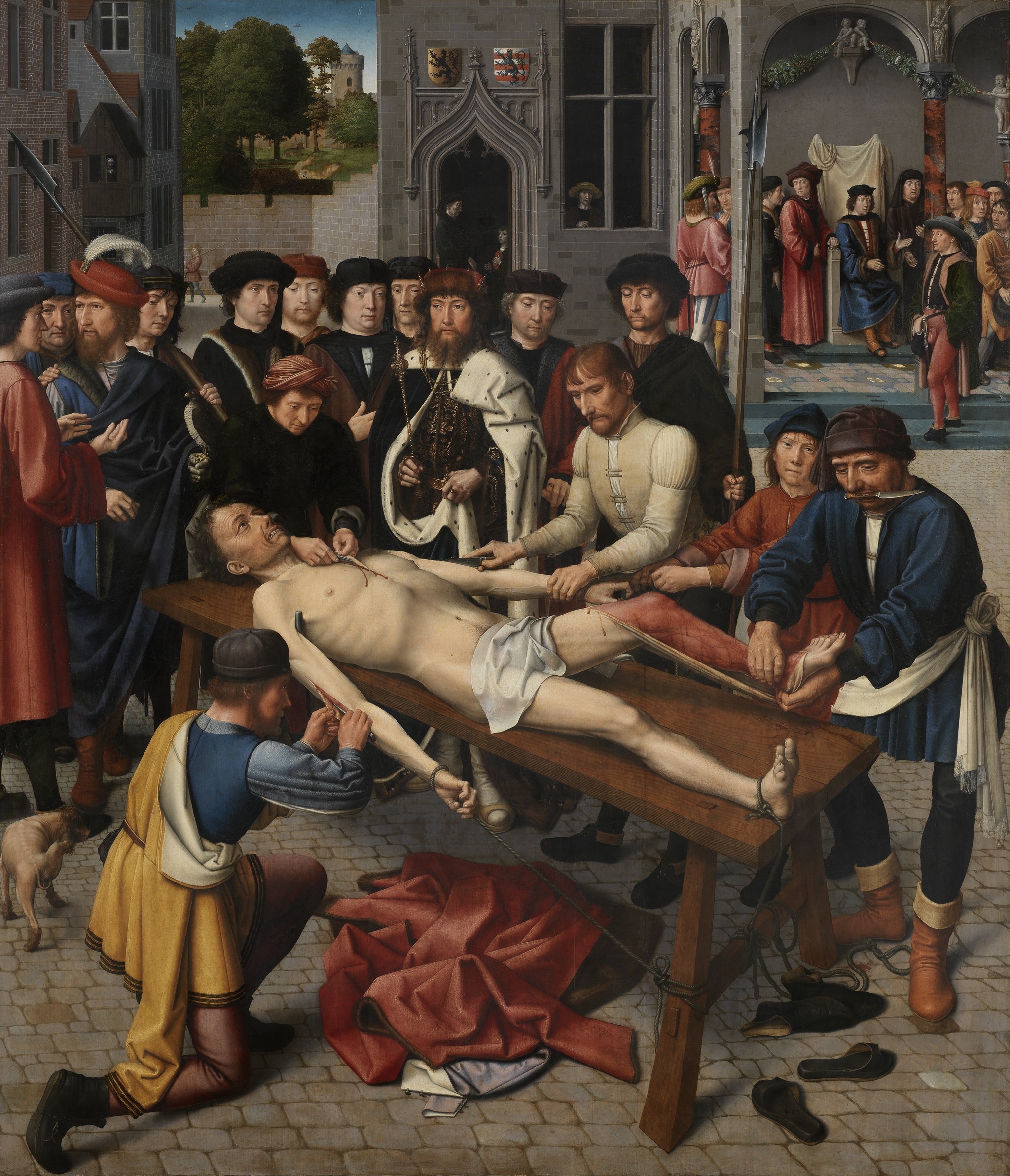
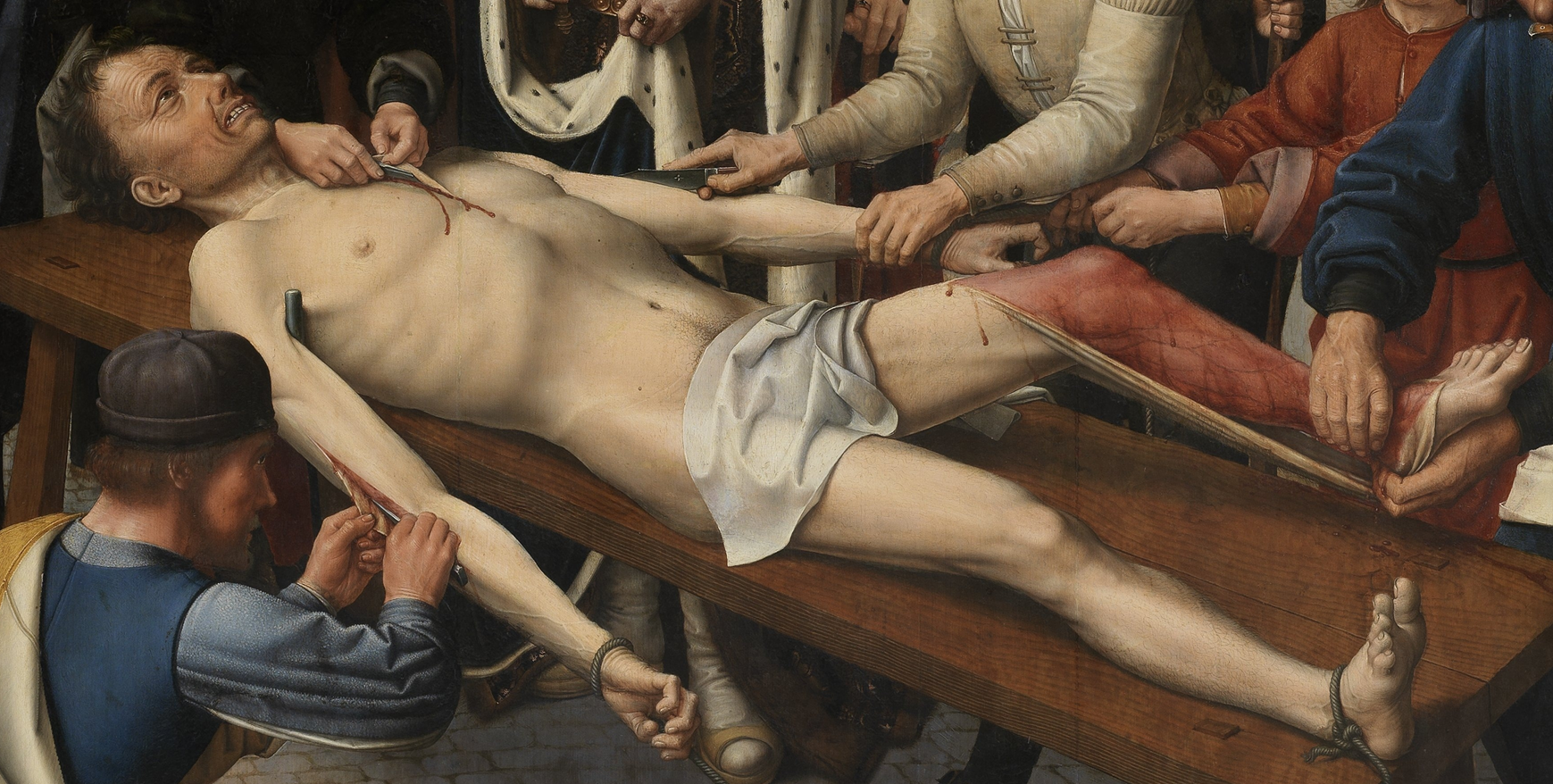
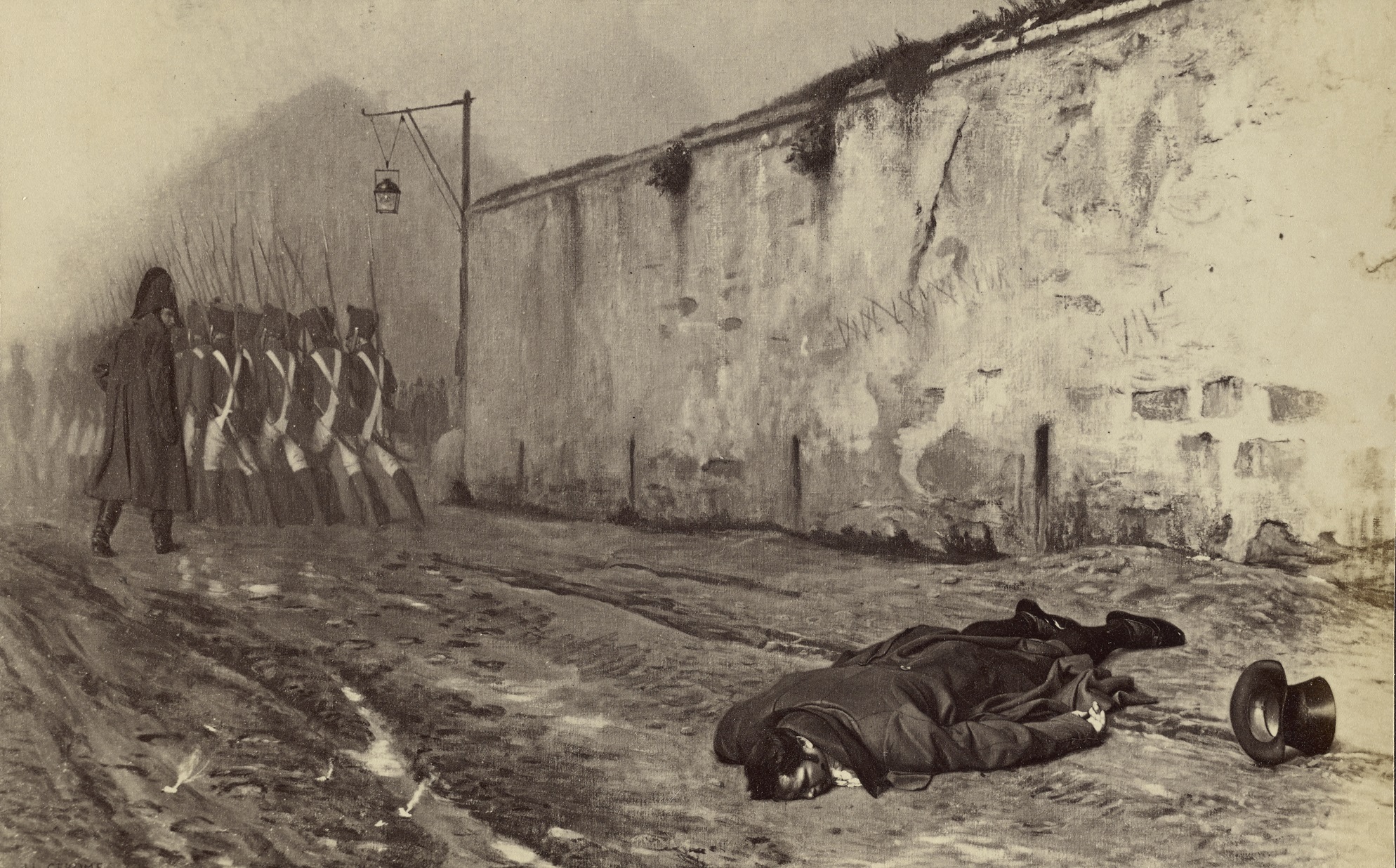
With my recent adventure into morbid paintings I discovered these interesting art paintings…

Eugène Trigoulet – Le Précurseur (1894) 

Caravaggio – Judith Beheading Holofernes 1598. Judith gets Holofernes drunk, then seizes her sword and slays him: Approaching to his bed, she took hold of the hair of his head.

Franz von Stuck – Lucifer 1890

here you can clearly see the wings of Lucifer.

Ilya Repin – Ivan the Terrible and His Son 1885

Parricide is the deliberate killing of one’s own parent, spouse, child, or other close relative. However, the term is sometimes used more generally to refer to the intentional killing of a near relative. It is an umbrella term that can be used to refer to acts of matricide, the deliberate killing of one’s own mother and patricide, the deliberate killing of one’s own father.

Nicolai Abildgaard – Nightmare 1800

My Dream, My Bad Dream by Fritz Schwimbeck

Hans Holbein – The Body of the Dead Christ in the Tomb 1521

Caravaggio – The Beheading of Saint John the Baptist  1608

Jakub Schikaneder – Murder in the house, 1890

Rembrandt – The Anatomy Lesson of Dr. Nicolaes Tulp 1632

Rembrandt – The Anatomy Lesson of Dr. Deijman (alternative spelling Deyman) 1656

racism in an enlightened world?

I watched a DVD last night by PJ Harvey. A Dog Called Money.

The quote that she said as she was filming in Washinton USA…“when white people plant a tree, they imagine black people hanging from it”.

She was being ironic… But also pointing out the endemic racism in America. We have lots of it here too, but in the twenty-first century, how can racism still exist???

For me I find racism very odd. It’s so much like once you see something you can’t unsee it. People who have black skin can’t help it, so why would you want to be angry with them for having different color skin?

Here in Australia, I judge people on their behavior, not their skin color….so I see behavior not skin color.

I enjoyed the DVD. She is an amazing artist and singer.

Video

The Most Macabre Painting in Art History

In 1672, the De Witt brothers were beaten, mutilated, and hanged before a crowd. It is even said that the people themselves committed an act of cannibalism with their severed body parts.

Tongue and finger of the De Witt brothers

Read more
Supporters of the De Witt brothers kept Johan’s tongue and a Cornelis’ finger as relics in lead boxes. It also contained documents explaining its contents. Based on these notes, we know that Nicolaas Witsen, mayor of Amsterdam, owned the relics between 1672 and 1717. In 1889 D.J. Cockuyt from Leiden gave the tongue, finger and the accompanying evidence to the museum. The then director had a “small coffin made of old oak wood, with a glass lid” made to display “these important historical objects”. Many museum visitors were shocked at the sight of this new acquisition. On October 23, 1893, the city council of The Hague banned the exhibition of the tongue and finger. Despite this, the body parts of the De Witt brothers have been on display in the gallery for the last thirty years.

In 2011, researchers from the Netherlands Forensic Institute (NFI) determined that the alleged big toe of Cornelis’s left foot was a finger. On the television program ‘Historisch Bewijs’ (Historical Evidence), the tongue and finger were once again scrutinized, this time to investigate their authenticity. It was not possible to draw up a DNA profile with material from the tongue and finger, but it could be established that ‘the finger was forcibly removed from the body and belonged to a man between 40 and 50 in the year 1672’. This makes it a lot more likely that the body parts do indeed come from the brothers Johan and Cornelis de Witt.

the art of ECM record covers

Here are just a small collection of ECM covers. It’s not just the photos but the photos with the graphics to create the art.

ECM (Edition of Contemporary Music) is an independent record label founded by Karl Egger, Manfred Eicher and Manfred Scheffner in Munich in 1969. While ECM is best known for jazz music, the label has released a variety of recordings, and ECM’s artists often refuse to acknowledge boundaries between genres. ECM’s motto is “the most beautiful sound next to silence”, taken from a 1971 review of ECM releases in Coda, a Canadian jazz magazine.[1]

ECM has been distributed in the U.S. by Warner Bros. RecordsPolyGram RecordsBMG, and, since 1999, Universal Music, the successor of PolyGram, worldwide. Its album covers were profiled in two books: Sleeves of Desire and Windfall Light, both published by Lars Müller.

The Texas City Disaster

I only learnt about this disaster today. Approximately 600 people died.

The 1947 Texas City disaster was an industrial accident that occurred on April 16, 1947, in the port of Texas CityTexas, United States, located in Galveston Bay. It was the deadliest industrial accident in U.S. history and one of history’s largest non-nuclear explosions.

The explosion was triggered by a mid-morning fire on board the French-registered vessel SS Grandcamp (docked at port), which detonated her cargo of about 2,300 tons (about 2,100 metric tons) of ammonium nitrate.[1] This started a chain reaction of fires and explosions aboard other ships and in nearby oil-storage facilities, ultimately killing at least 581 people, including all but one member of Texas City’s volunteer fire department.