what photography means to me

I really think that anyone can take a photo of something…

i.e. a bunny

or a bird…

these are both excellent photos of a bunny and a bird but for me it’s not really photography.

let me explain

I remember watching this amazing nature photographer talk about this issue when he said: “anyone can take a picture of a polar bear, but it’s just a static image, no context”. In order to have a compelling image the bear needs to have some interesting context.

From day one I didn’t want to be just taking photos of ‘things’ I wanted to make ‘art’.

I watched a Netflix show about these people doing scary stuff on the top of very high buildings. skywalkers

When he meets a girl doing similar stuff, they end up meeting and falling in love. He says: “I was just taking photos of myself on the top of buildings, but when I met her, she was making art”.

Since the advent of mobile phones, everyone is now a photographer, and the need for professional photography is no longer needed. I’m not a purist at all, but I used to be when I first started. Now I like Instagram just as much as the next person.

Gavin.

letting go

“The crucial point is: by changing ourselves, we change the world. As we become more loving on the inside, healing occurs on the outside. Much like the rising of the sea level lifts all ships, so the radiance of unconditional love within a human heart lifts all of life.”
― David R. Hawkins

You won’t believe it, but I bought a new book.

I have not read a book in many years, and I’m going to make the effort. G

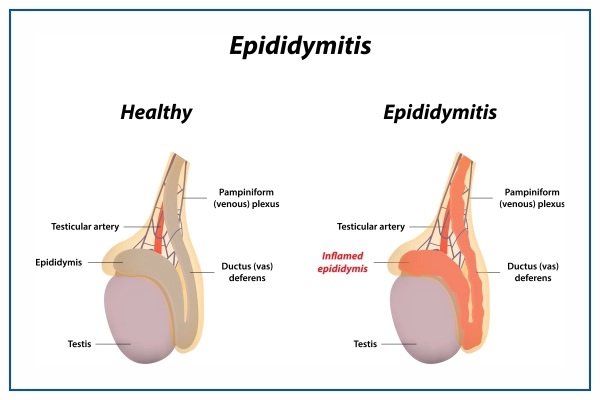
Chronic epididymitis (Men’s problems)

I’ve had Chronic epididymitis for approximately 20 years now.

The pain is very similar to being kicked in the balls. I’ve dealt with the pain (usually once a week, with masturbation) to relive the buildup of sperm fluid. The problem is: I really HATE masturbation with a passion, as it is very painful for me. Since my mental health has improved so much, I recently decided to tackle this problem in a different way. Instead of waiting the end of every week (when the pain is unbearable), I’ve decided to put up with a smaller amount of pain every day. So far this is working, and I’m really noticing a huge difference in my wellbeing. I just hope this continues to work. Gavin.

Epididymitis is an inflammation of the coiled tube, called the epididymis, at the back of the testicle. The epididymis stores and carries sperm. Males of any age can get epididymitis.

It’s been two weeks now and I feel like I’m no longer self harming (with masturbation). Very grateful for this. G.

I’m sugar free

For me the best thing I’ve done for myself is to be off sugar.

I lived on sugar as a child. Cordial drinks after school. Sweet homemade biscuits. Dinner was always followed by dessert, and in the evening, we had sweets and chocolates. This was every day!

Then as an adult, chocolate was one of the three food groups. Red wine, Coffee and Chocolate. I would buy it in bulk. Seven 250-gram blocks at a time. I would often eat two of these a day. That’s 500 grams of chocolate !!!

I’m now 58 and I’m overweight. So being sugar free is the key to feeling really good. It’s like being a different person!

When I eat sugar, I feel sluggish, bloated and fuzzy in the head. Sugar gives me a false sense of peace, just like alcohol does. Being sugar free takes courage but very much worth it 100%

Gavin.

five traumas

trauma

noun1.

a deeply distressing or disturbing 

experience.”

a personal trauma like the death of a child”

2.MEDICINEphysical injury.”rupture of the diaphragm caused by blunt trauma”

1.Childhood sexual abuse. 6 to 9.
2. Domestic violence. First 16 years.
3. Being bashed and raped. Age 19.
4. Being relentlessly stalked. 2007 to 2010. Three and a half years.
5. Neighbour from hell. 2013 to 2022. Eight and a half years.

    As you can see if you add up all the years of trauma, there is a vast chunk of my life spent in trauma and abuse.

    The cost has mostly been on my mental health.

    Complex Post Traumatic Stress Disorder. Depression and more recently Bipolar 2.

    At the moment my biggest issues are isolation. Lack of exercise and a need to regulate my diet. Getting there slowly. I have stopped drinking altogether which is excellent…and it also saves me a lot of money. Nightmares are a constant issue, but I’ve been having them since I was four, so used to dealing with them.

    Grow has helped me a lot over the years.

    Whatever the level of disorder or other limitations in my life,
    my existing situation can be constantly improved by good
    habits of thinking and acting and cooperation with help.

    Gavin.

    my father’s hand

    my father had a very bad case of Dupuytren’s contracture, which made his hands painful and curled.

    interestingly I have developed the same condition on my right hand.

    Dupuytren disease is genetic. It runs in families.

    it is also known as Viking’s disease.

    As the disease progresses, affected individuals may experience difficulty extending their fingers fully. This can make it challenging to perform everyday tasks such as gripping objects, typing, or buttoning clothes.

    anyway, my father had it, and I’ve got it. It’s only going to get worse… so that’s life.

    Dupuytren’s contracture

    Video

    Open Affection Between Men was Normal in the 1940s: Why Did Things Change?

    As you make your way through the photos below, many of you will undoubtedly feel a keen sense of surprise — some of you may even recoil a bit as you think, “Holy smokes! That’s so gay!”

    The poses, facial expressions, and body language of the men below will strike the modern viewer as very gay indeed. But it is crucial to understand that you cannot view these photographs through the prism of our modern culture and current conception of homosexuality. The term “homosexuality” was in fact not coined until 1869, and before that time, the strict dichotomy between “gay” and “straight” did not yet exist. Attraction to, and sexual activity with other men was thought of as something you did, not something you were. It was a behavior — accepted by some cultures and considered sinful by others.

    But at the turn of the 20th century, the idea of homosexuality shifted from a practice to a lifestyle and an identity. You did not have temptations towards a certain sin, you were a homosexual person. Thinking of men as either “homosexual” or “heterosexual” became common. And this new category of identity was at the same time pathologized — decried by psychiatrists as a mental illness, by ministers as a perversion, and by politicians as something to be legislated against. As this new conception of homosexuality as a stigmatized and onerous identifier took root in American culture, men began to be much more careful to not send messages to other men, and to women, that they were gay. And this is the reason why, it is theorized, men have become less comfortable with showing affection towards each other over the last century. At the same time, it also may explain why in countries with a more conservative, religious culture, such as in Africa or the Middle East, where men do engage in homosexual acts, but still consider homosexuality the “crime that cannot be spoken,” it remains common for men to be affectionate with one another and comfortable with things like holding hands as they walk.

    Whether the men below were gay in the way our current culture understands that idea, or in the way that they themselves understood it, is unknowable. What we do know is that the men would not have thought their poses and body language had anything at all to do with that question. What you see in the photographs was common, not rare; the photos are not about sexuality, but intimacy.

    These photos showcase an evolution in the way men relate to one another — and the way in which certain forms and expressions of male intimacy have disappeared over the last century.

    It has been said that a picture tells a thousand words, so while I have provided a little commentary below, I invite you to interpret the photos yourselves, and to ask and discuss questions such as: “Who were these men?” “What was the nature of their relationships?” “Why has male intimacy decreased and what are the repercussions for the emotional lives of men today?”

    From the Civil War through the 1920’s, it was very common for male friends to visit a photographer’s studio together to have a portrait done as a memento of their love and loyalty. Photographers would offer various backgrounds and props the men could choose from to use in the picture. Sometimes the men would act out scenes; sometimes they’d simply sit side-by-side; sometimes they’d sit on each other’s laps or hold hands. The men’s very comfortable and familiar poses and body language might make the men look like gay lovers to the modern eye — and they could very well have been — but that was not the message they were sending at the time. The photographer’s studio would have been at the center of town, well-known by everyone, and one’s neighbors would having been sitting in the waiting room just a few feet away. Because homosexuality, even if thought of as a practice rather than an identity, was not something publicly expressed, these men were not knowingly outing themselves in these shots; their poses were common, and simply reflected the intimacy and intensity of male friendships at the time — none of these photos would have caused their contemporaries to bat an eye.