my father had a very bad case of Dupuytren’s contracture, which made his hands painful and curled.
interestingly I have developed the same condition on my right hand.
Dupuytren disease is genetic. It runs in families.
it is also known as Viking’s disease.
As the disease progresses, affected individuals may experience difficulty extending their fingers fully. This can make it challenging to perform everyday tasks such as gripping objects, typing, or buttoning clothes.
anyway, my father had it, and I’ve got it. It’s only going to get worse… so that’s life.
I finally saw this film yesterday. I had been waiting four months to see it because I live in Australia.
If you were to see this film without knowing anything about it, you may miss many things in the film because the film is not a Hollywood film. It is much more like a documentary.
Because I had to wait, I already knew a lot about this film, so I didn’t miss any of the information (scenes). My friend who was with me missed several key clues that were in the film. I’m sure this has happened to a lot of people.
I did so much research it wasn’t funny. I watched over thirty reviews and over ten interviews with the director Jonathan Glazer.
I believe that due to the amount of time that has passed since the second world war, more films and documentaries can now be made from the German point of view. I’ve actually been waiting for this change since the year 2000, when I became very interested in history. There is a plethora of films and documentaries made from the Allies point of view. In reality there are always two sides to every conflict.
I will be seeing this film again. I cried a lot during it, which I was expecting.
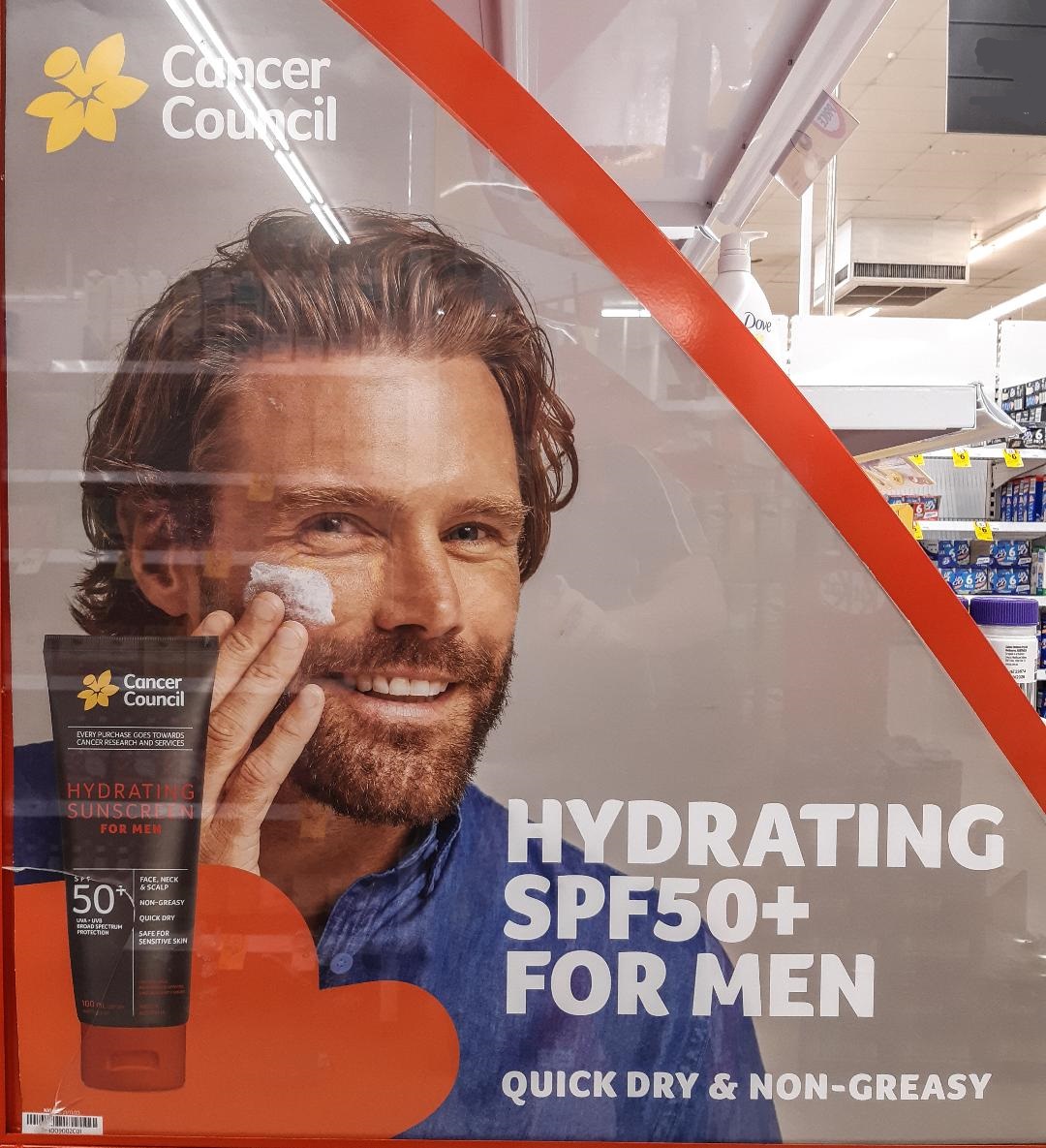
I found this in Coles yesterday, and was rather miffed.
Most of the men I know, don’t wear sunscreen…and I can’t see them buying sunscreen for men.
Does this mean I’ve been buying women’s sunscreen all this time?
Ans: is probably yes.
gender-neutral
adjective
not relating or specific to people of one particular gender.”gender-neutral games and toys”
denoting a word or expression that cannot be taken to refer to one gender only.”gender-neutral terms like flight attendant, firefighter, and police officer”
I’m sure the company is just trying to make some extra money – SPF50+ FOR MEN quick dry & non-greasy.
The sunscreen I use is very specific and is expensive, because I like a sunscreen that doesn’t feel like you are wearing sunscreen.
This show was difficult to get into, but I eventually did get into the groove.
I’m currently in season two and I’ really struggling with the constant lying. I know lying is part of TV shows, but this show goes way too far. I feel manipulated and annoyed. The lies are all so convincing, but as soon as you are sucked into the thought of believing someone, the lie is once more revealed.
I will finish watching the show because I want to see the ending, but I no longer care about any of the characters. NONE of them ! They are ALL so manipulative, and you cannot believe anyone.
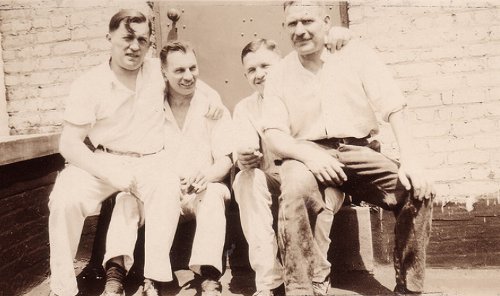
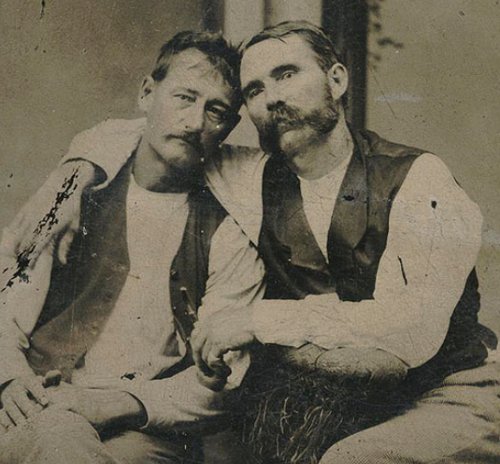
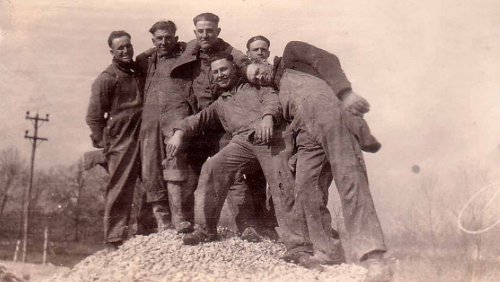
As you make your way through the photos below, many of you will undoubtedly feel a keen sense of surprise — some of you may even recoil a bit as you think, “Holy smokes! That’s so gay!”
The poses, facial expressions, and body language of the men below will strike the modern viewer as very gay indeed. But it is crucial to understand that you cannot view these photographs through the prism of our modern culture and current conception of homosexuality. The term “homosexuality” was in fact not coined until 1869, and before that time, the strict dichotomy between “gay” and “straight” did not yet exist. Attraction to, and sexual activity with other men was thought of as something you did, not something you were. It was a behavior — accepted by some cultures and considered sinful by others.
But at the turn of the 20th century, the idea of homosexuality shifted from a practice to a lifestyle and an identity. You did not have temptations towards a certain sin, you were a homosexual person. Thinking of men as either “homosexual” or “heterosexual” became common. And this new category of identity was at the same time pathologized — decried by psychiatrists as a mental illness, by ministers as a perversion, and by politicians as something to be legislated against. As this new conception of homosexuality as a stigmatized and onerous identifier took root in American culture, men began to be much more careful to not send messages to other men, and to women, that they were gay. And this is the reason why, it is theorized, men have become less comfortable with showing affection towards each other over the last century. At the same time, it also may explain why in countries with a more conservative, religious culture, such as in Africa or the Middle East, where men do engage in homosexual acts, but still consider homosexuality the “crime that cannot be spoken,” it remains common for men to be affectionate with one another and comfortable with things like holding hands as they walk.
Whether the men below were gay in the way our current culture understands that idea, or in the way that they themselves understood it, is unknowable. What we do know is that the men would not have thought their poses and body language had anything at all to do with that question. What you see in the photographs was common, not rare; the photos are not about sexuality, but intimacy.
These photos showcase an evolution in the way men relate to one another — and the way in which certain forms and expressions of male intimacy have disappeared over the last century.
It has been said that a picture tells a thousand words, so while I have provided a little commentary below, I invite you to interpret the photos yourselves, and to ask and discuss questions such as: “Who were these men?” “What was the nature of their relationships?” “Why has male intimacy decreased and what are the repercussions for the emotional lives of men today?”
From the Civil War through the 1920’s, it was very common for male friends to visit a photographer’s studio together to have a portrait done as a memento of their love and loyalty. Photographers would offer various backgrounds and props the men could choose from to use in the picture. Sometimes the men would act out scenes; sometimes they’d simply sit side-by-side; sometimes they’d sit on each other’s laps or hold hands. The men’s very comfortable and familiar poses and body language might make the men look like gay lovers to the modern eye — and they could very well have been — but that was not the message they were sending at the time. The photographer’s studio would have been at the center of town, well-known by everyone, and one’s neighbors would having been sitting in the waiting room just a few feet away. Because homosexuality, even if thought of as a practice rather than an identity, was not something publicly expressed, these men were not knowingly outing themselves in these shots; their poses were common, and simply reflected the intimacy and intensity of male friendships at the time — none of these photos would have caused their contemporaries to bat an eye.










 Noir
Noir 