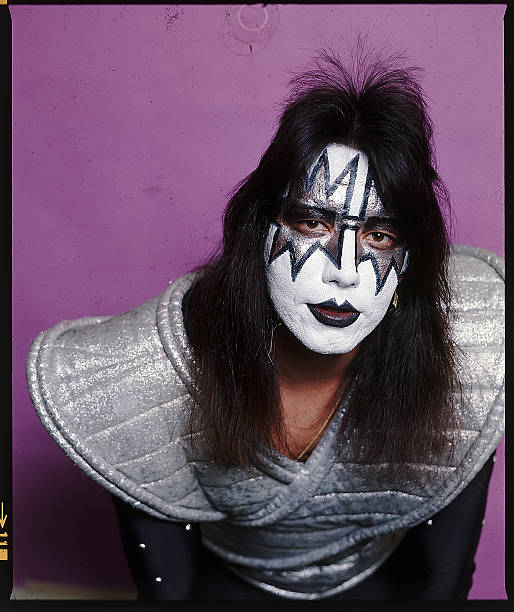
Ace Frehley RIP
This story is rather distressing (so viewer discretion is advised).
A compelling story of a British man who was abused by his wife.
I made myself watch this as it is (for me) important. The three children in this story are witness to the horrific violence, which is most distressing. Thankfully the mother did plead guilty in the end.

These days you would be very lucky to see a young person without a smartphone in their hand.

One-Trick Pony
noun
a person or thing with only one special feature, talent, or area of expertise.
Some word experts say the idiom “one-trick pony” comes from the circus. A circus pony that can only do one trick is not going to entertain a crowd for very long. The term “one-trick pony” appeared around the turn of the twentieth century. Within about fifty years, the term had become an idiom.
Away with the Pixies
informal•British English
(see also: away with the fairies)
distracted, in a dreamworld, or out of touch with reality.
“you seem away with the pixies, are you listening?”
Pixies are: playfully impish or mischievous, prankish.
pixie mood; a pixie sense of humor.
The origin of the phrase “away with the pixies” is unclear, but it relates to the folklore of pixies, which dates back to Celtic Britain and is particularly prominent in Southwest England. The idiom, used to describe someone mentally absent or flighty, suggests a connection to fairies taking or captivating people’s minds in folklore. While the phrase isn’t directly from a single source, it draws on the folk belief that pixies were mischievous entities capable of robbing people of their wits, as seen in stories and folklore.
Enen a trained Monkey can do that
We need to be careful that we don’t offend the monkey community while explaining this one.
To all monkeys past and present, we honour you.
It would be phrased as such largely because the person doing it wouldn’t require much intelligence nor oversight – and likely the connotation that the person would also be paid peanuts. Not literally, of course.
All of this imagery is made to offend deliberately, and to derogate those who take these types of jobs.
During war time nostalgia was considered a serious, sometimes fatal, medical condition that included symptoms like anxiety, insomnia, and heart palpitations, and was often treated by returning the soldier home.
While today nostalgia is seen as a benign longing for the past, in the 17th to 19th centuries, it was viewed as a mental illness, particularly among soldiers, and was a precursor to later understandings of conditions like PTSD.
The longing for home and the past served as a psychological coping mechanism for soldiers facing trauma and separation from loved ones.
Historical Understanding and Treatment
Nostalgia as a Coping Mechanism

I’ve met many people with anxiety (Generalized Anxiety Disorder (GAD), panic disorder, and social anxiety disorder) and it’s a very real issue facing people today.
But if you want to make your anxiety worse: go out of your way to avoid it. ‘Avoidance behaviors’ have the ability to amplify your problem, no matter what it is.
I know this because I have PTSD and anyone with PTSD knows that we have an elaborate list of ways we avoid stuff. The list is long. Here are just a few…
What happens when we do our avoidance stuff, we actually re-enforce the anxiety.
Each time you do the avoidance behavior the anxiety says:
YES! confirmed!
Thank you.
Now I will bring on more anxiety…
…and the cycle just repeats and repeats, sometimes for years or even decades.
The way out of the cycle is to go toward the anxiety (only if it is safe to do so). Going toward the thing you fear is the best way to take away its energy. When this becomes your healthy habit things change significantly.
The opposite of an error is usually the opposite error. – (The Grow Program).

I really wish that someone had told me these lessons. I’m sure life you have been a lot better for me.
Resilient people know that suffering is part of life. Trying to avoid suffering only makes suffering worse. Accept it and move forward, instead of going backwards avoiding all the stuff you find unpleasant.
Gavin.


Per 100 grams of cereal:
79 grams of carbohydrate
26.9 grams of sugar
85 grams of salt

I grew up with sugar in my life. We lived on the stuff, but we were also very active. We spent the whole day exercising.
If I were to eat this cereal as an adult today, I would get very sick. G

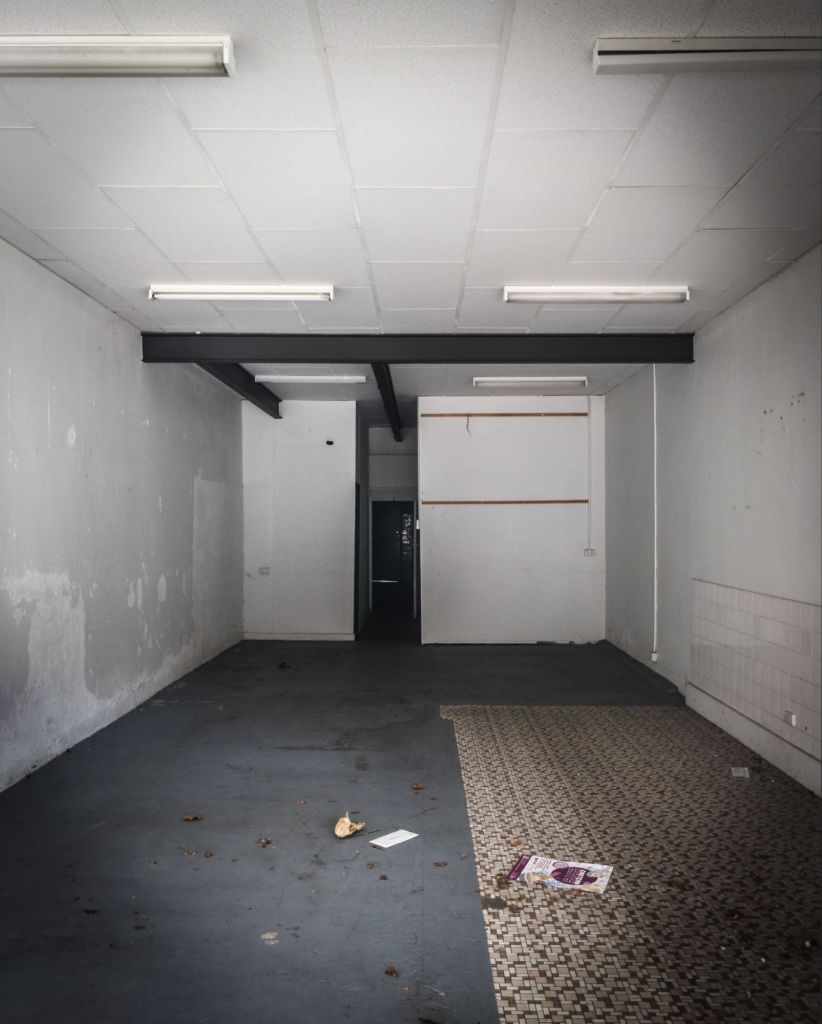
A liminal space is a transitional place or state of being, literally from the Latin word “limen” meaning “threshold,” that is caught between what was and what will be. These are physical spaces like empty hallways or psychological states like major life changes that evoke a complex mixture of feelings, often an unsettling blend of familiarity, nostalgia, and unease. Examples include waiting rooms, deserted parking lots, or the period of adolescence.
A recollection of items and events encountered in the past 7 decades (a/o 2025) of my life on Planet Earth
Imagination with discovery, fiction and art.
Sapere aude!
Island photography and written words at their best.
Un peu de tout peinture, pastel, logiciel 3d et autres / A bit of everything painting, pastel, 3d softwares and a bit more
Science, Philosophy, Desire
I suffer from chronic migraine - at The Mindful Migraine blog I share some of the ideas that have helped - I hope they help you too.
Quirky internet wunderkammer
A Place Where Narcissist Scapegoats Convene
THE DRIVELLINGS OF TWATTERSLEY FROMAGE
Poetry, Photography, and Thoughts
Historical and Horror Fiction Writer
Psychotherapy, Walk and Talk Therapy, Neurodiversity, Mindfulness, Emotional Wellbeing
RECIPES /COOKING VIDEOS
Love is Joy!
Life is all about being curious, asking questions, and discovering your passion. And it can be fun!
Writer
We're all on a road to somewhere.
Life after high conflict divorce with children
My Life After Narcissistic Abuse
Stories, Poetry, Thoughts, Life
Just another WordPress.com site
Stella
Pursuing sanity in a world insane
Exploring the abandoned, derelict and forgotten of Adelaide, South Australia and beyond
the most beautiful sound next to silence.
"Literature is language charged with meaning." Ezra Pound
You know, it's cool for cats.
Life Experiences, Quotes & Randoms
Sharing steps from my path of life...
"El Mundo Visible es Sólo un Pretexto" / "The Visible World is Just a Pretext".-
Fotoblog
My 2016 iPhone Project 366
a picture a day - no exceptions (c) yours truly
Sharing Great Blog Posts
Exhibiting Artist
Wisdom from the Blogs I Follow
west517 | the world we know
Ina Vukic - Croatia: people, politics, history, economy, transition from communism to democracy
The only archive reviewing every ECM album in existence.
Le PhotoBlog de SeniSilat
Ink, pen and watercolor
'Cuz Yesterday Is Long Gone & Tommorow Is Unpromised
Surviving through Depression. "Specter" is the personification of my depression.
 Noir
Noir 